



Write To Us
info@aerois.vcUSA Address
600 Congress Ave, Austin, Suite 190 (first floor)
TX 78701, USA
TX 78701, USA
Israel Address
Derech Menachem Begin 156, Tel Aviv Suite 5100 (5th floor), 6942108
Utility Pages

Instead of investing in a startup company or fund, secondaries involve buying into existing private equity investments.
These are assets that have already been owned, developed, and managed, often for several years.
This gives investors exposure to value creation already underway, greater visibility into performance, and the potential to acquire high-quality investments at a discount.
Secondaries offer several distinct portfolio benefits:
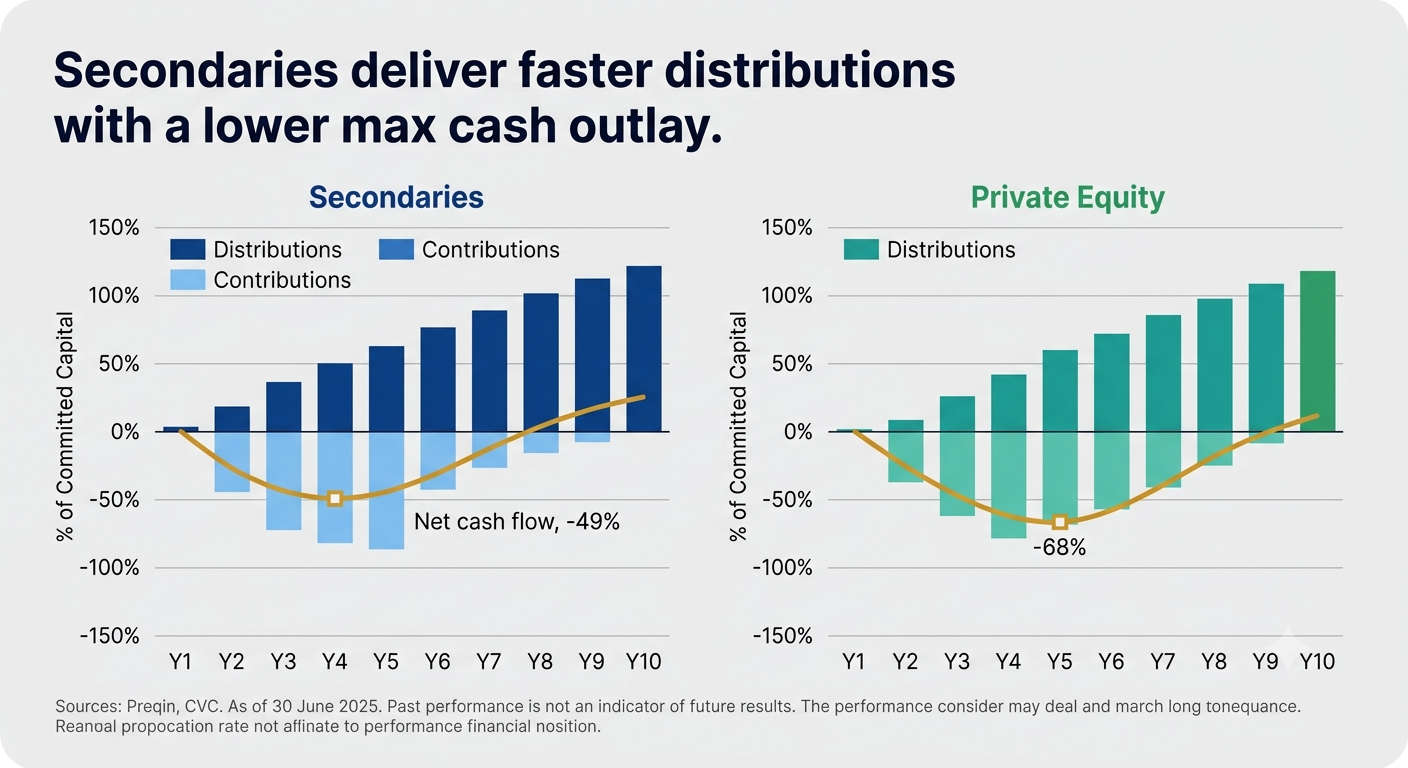
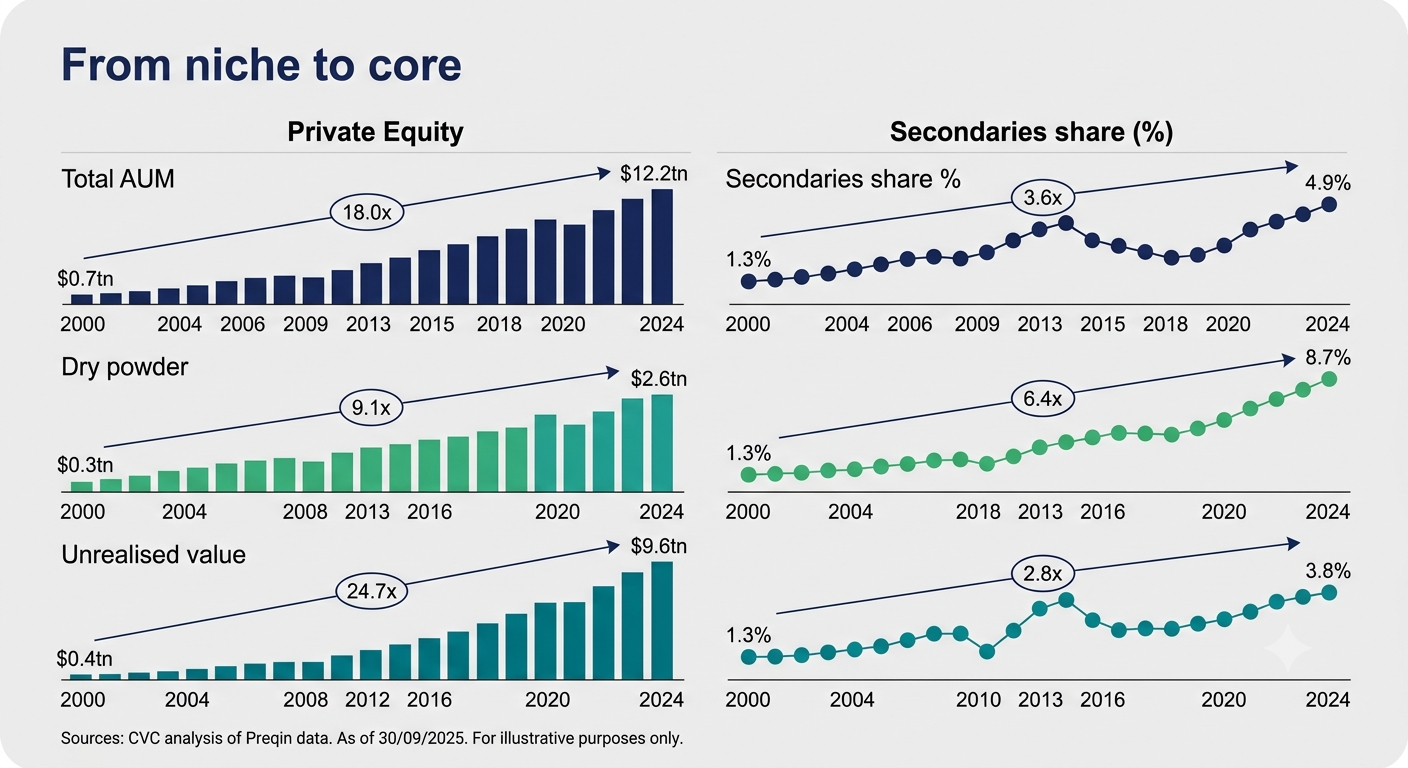
Private equity secondaries have evolved from a niche liquidity solution into a core and rapidly expanding segment of the private markets landscape.
Persistent distribution slowdowns, extended holding periods, and significant unrealized value across private equity portfolios have created a growing imbalance between capital invested and capital returned to investors.
Secondaries provide flexibility within an otherwise illiquid asset class, enabling liquidity generation, active portfolio management, and strategic repositioning for both Limited Partners (LPs) and General Partners (GPs), while allowing underlying assets additional time to realize value.
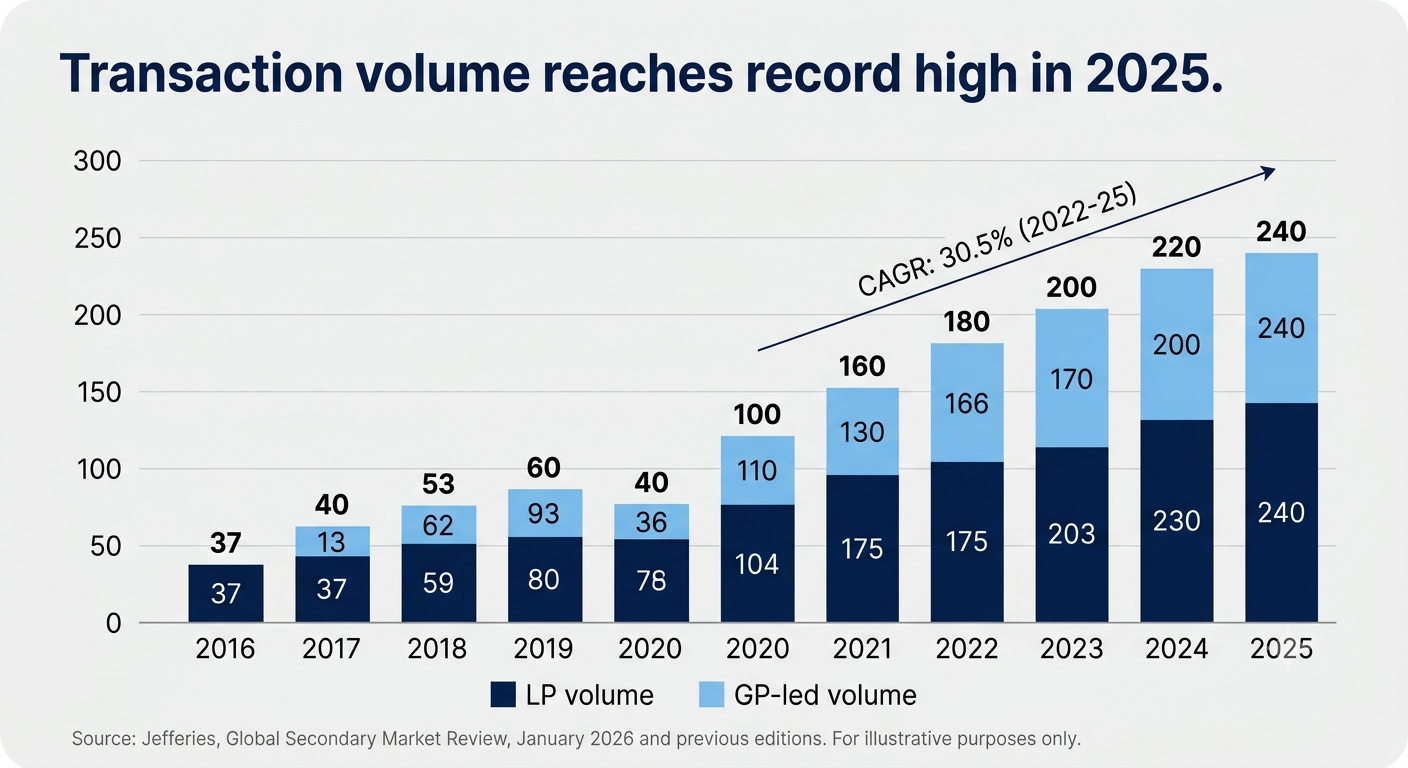
These dynamics are driving a broader, deeper, and increasingly attractive opportunity set for secondary investors across both LP-led and GP-led transactions.
Secondaries opportunities broadly fall into two categories:
These involve buying existing fund interests from investors.
Investors may sell to rebalance portfolios, manage liquidity, or adjust exposures in a changing environment.
These transactions can offer enhanced visibility into underlying portfolio performance and the potential to acquire high-quality assets at attractive entry valuations relative to primary investments.
These involve acquiring assets directly from fund managers, often through continuation vehicles.
These are typically high-quality companies that managers know well and believe have further value to realize.
This reflects a broader shift in private equity, where strong assets are held for longer to capture their full potential rather than being sold according to a predefined fund life.
For investors, this provides access to concentrated, high-conviction opportunities in seasoned assets, often alongside leading sponsors.
Across both transaction types, the common theme is access to seasoned assets.
Companies are already operating, strategies are in place, and value creation is underway.
This can lead to:
The result is an investment profile that complements traditional private equity, providing access to the same asset class at a different stage of the investment lifecycle.
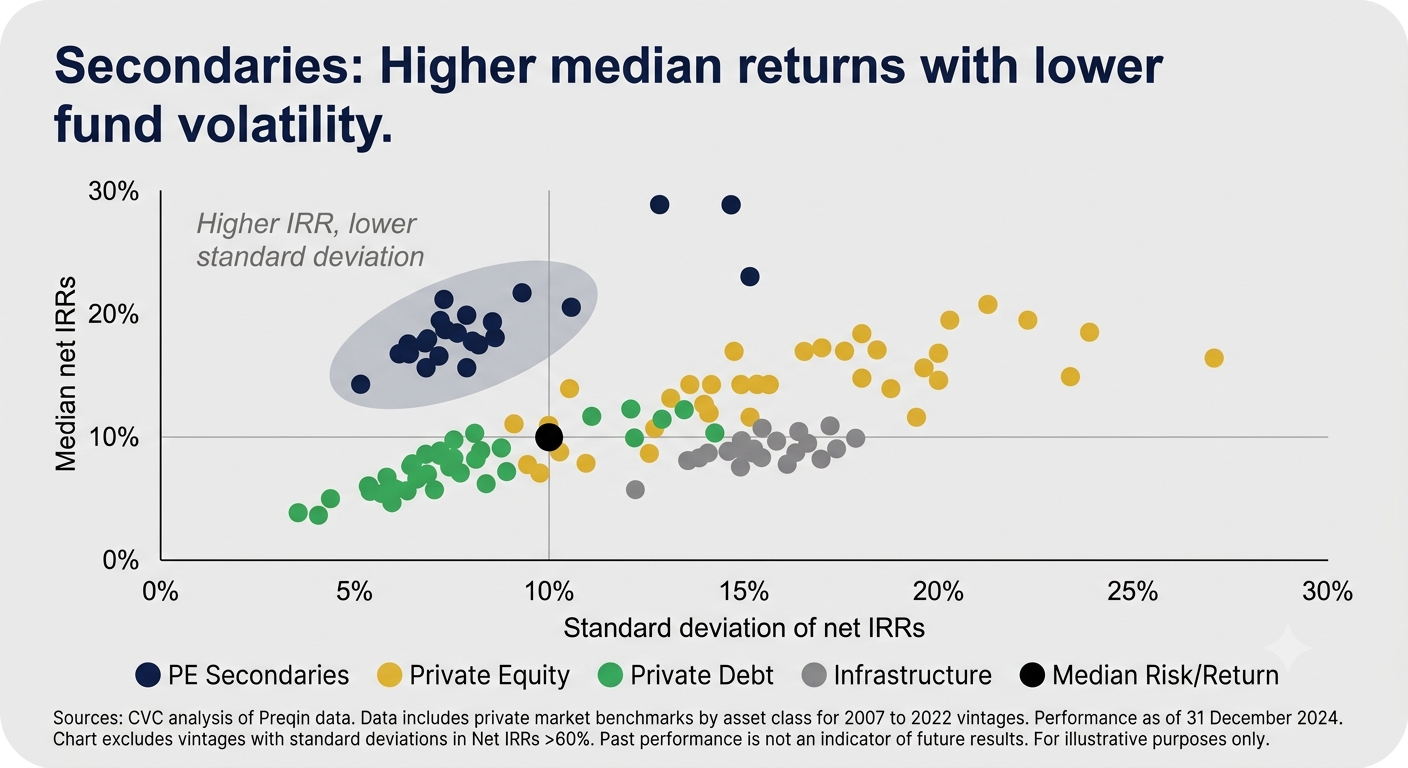
While the opportunity set is large, outcomes can vary significantly.
Secondaries is a sourcing-driven market, where access, judgment, and discipline determine investment outcomes.
The most attractive opportunities are often proprietary and require deep relationships with both investors and fund managers.
A leading manager can review a wide universe of transactions but invest selectively, focusing on situations where asset quality, pricing, and future value creation align.
Experience is also essential in assessing assets that are already in motion, understanding what has been achieved and what remains to be delivered.
For investors, the key challenge is not whether to allocate to secondaries, but how to access the most attractive opportunities in a consistent and scalable way.